Why Most Ideas Die Before They Even Start
Every great product begins the same way — with a spark.An idea that hits in the shower, while scrolling, or mid-conversation. But most ideas fade just as quickly because they never get validated.
Why? Because validation feels hard.People assume it means expensive research, business plans, or long PowerPoint decks.
At ProductM8, we believe you can validate the core of an idea in under an hour — if you ask the right questions and use the right framework.
Here’s how.
⚙️ Step 1: Capture the Spark
Every idea starts with why.Before doing anything else, write down — in plain language — what problem your idea solves and who it’s for.
In ProductM8, open the Business Idea Builder and start with these simple questions:\
🧩 Question 1. Name of your Business
Purpose:This gives your idea an identity — even if it’s temporary.Choosing a name helps you visualize your business as something real and tangible, not just an abstract thought.
Tip:Don’t overthink it. Pick something that represents your idea or audience — a working name is enough to keep you focused.
💡 Question 2. Describe your business idea
Purpose:This is your elevator pitch in plain language.It’s where you capture what your business does and who it’s for, without the fluff.
Prompt to guide them:
“We help [audience] who struggle with [problem] by providing [solution].”
Example:
“We help busy parents find trusted after-school activities for their kids through a simple app.”
🧠 Question 3. What problem are you trying to solve?
Purpose:Every great business solves a meaningful problem.This question helps you uncover the pain point or friction that exists for your target audience.
Think about:
What’s frustrating people today?
What’s costing them time, money, or energy?
What do they complain about most often?
Outcome:A strong problem statement keeps your solution grounded and your idea relevant.
🔥 Question 4. What inspired you to come up with this idea?
Purpose:This gives your idea authenticity and context.Understanding your inspiration helps shape the story behind your business — whether it came from personal experience, observation, or a market gap you noticed.
Why it matters:Your “why” becomes part of your brand narrative later — investors, teammates, and customers all connect more deeply when they understand where the idea came from.
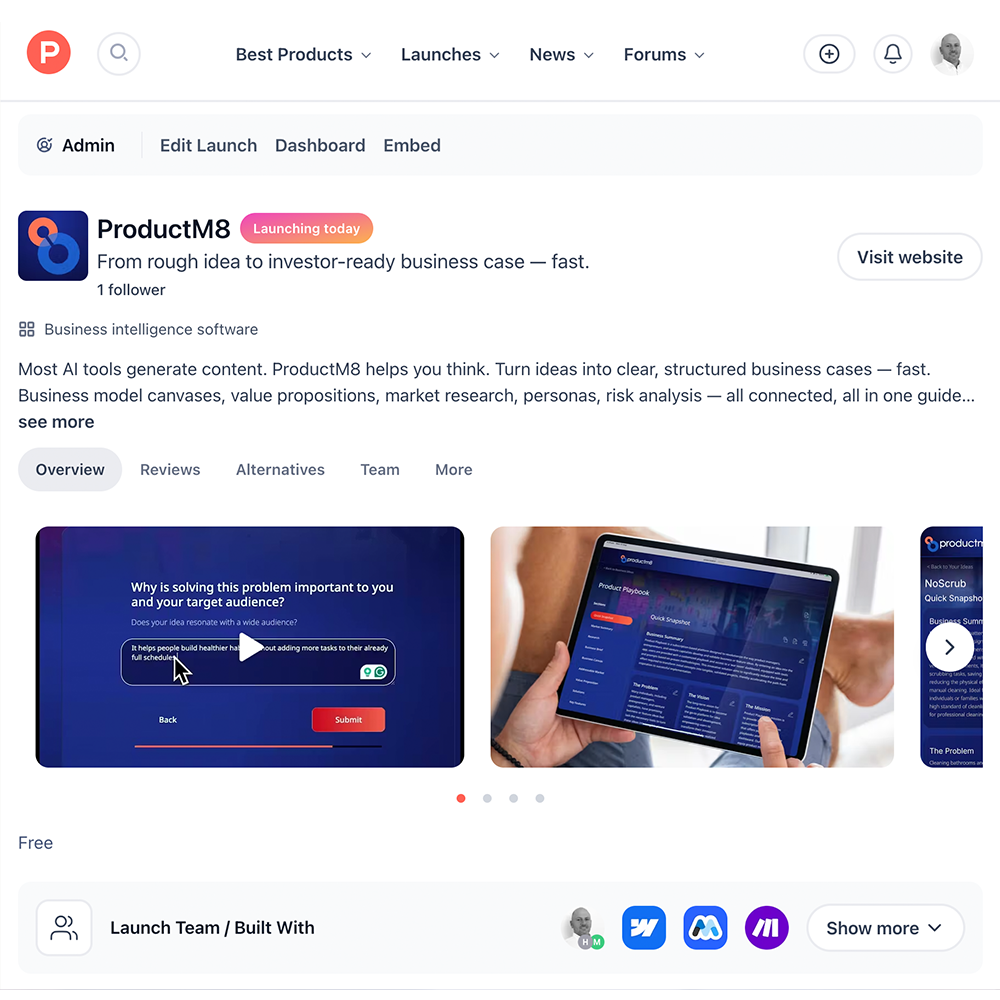
❤️ Question 5. Why is solving this problem important to you and your target audience?
Purpose:This connects your motivation to your market’s need.It helps you align your personal drive with a real-world impact, ensuring your idea has both emotional and commercial value.
Ask yourself:
Why does this problem matter now?
Who will truly care if it’s solved?
How would their life or business improve?
And the outcome:
By clarifying the “why it matters,” you build a stronger foundation for your vision, mission, and value proposition later in the process... Hit Submit