In today’s fast-paced digital world, product managers and UX designers are often caught between two forces: the need to innovate and the demands of their customers. Striking the right balance between these two can be the difference between creating a product that disrupts the market and one that merely keeps up with it. But how do you know when to listen to your customers and when to lead them into uncharted territory?
The Challenge of Innovation
Innovation is the lifeblood of successful products. It’s what differentiates leaders from followers, and disruptors from the disrupted. However, innovation doesn’t come without risks. Pushing the envelope too far or too fast can alienate customers who aren’t ready for change, while failing to innovate can render a product obsolete.
For product managers and UX designers, the challenge is twofold: identifying opportunities for innovation and determining when to implement them. But innovation for its own sake is rarely the answer. It must be grounded in an understanding of customer needs and market trends.
The Power of Listening
Listening to customers is a foundational principle of product management and UX design. Users provide valuable insights into what’s working, what’s not, and what they want to see in the future. By listening to their feedback, you can refine your product to better meet their needs and address their pain points.
But listening to customers doesn’t mean blindly following their every request. Customers often express their desires in terms of solutions rather than problems. They might ask for specific features without fully understanding how those features fit into the bigger picture or align with the product’s goals.
This is where the art of listening comes in. As a product leader, your job is to dig deeper into customer feedback, identifying the underlying problems or needs that drive their requests. By understanding these root causes, you can develop solutions that address their concerns in a way that aligns with your vision for the product.
The Need to Lead
While listening to customers is crucial, there are times when you need to lead them—especially when it comes to innovation. Customers don’t always know what they want, especially when it comes to groundbreaking ideas. As Henry Ford famously said, “If I had asked people what they wanted, they would have said faster horses.”
Leading customers means having the courage to introduce new concepts, features, or designs that they may not have envisioned but will ultimately improve their experience. It requires a deep understanding of your customers and the market, as well as a clear vision of where you want your product to go.
However, leading doesn’t mean ignoring customers feedback. It’s about guiding your customers through change, helping them understand the value of your innovations, and ensuring that your product remains intuitive and user-friendly, even as it evolves.
Finding the Balance
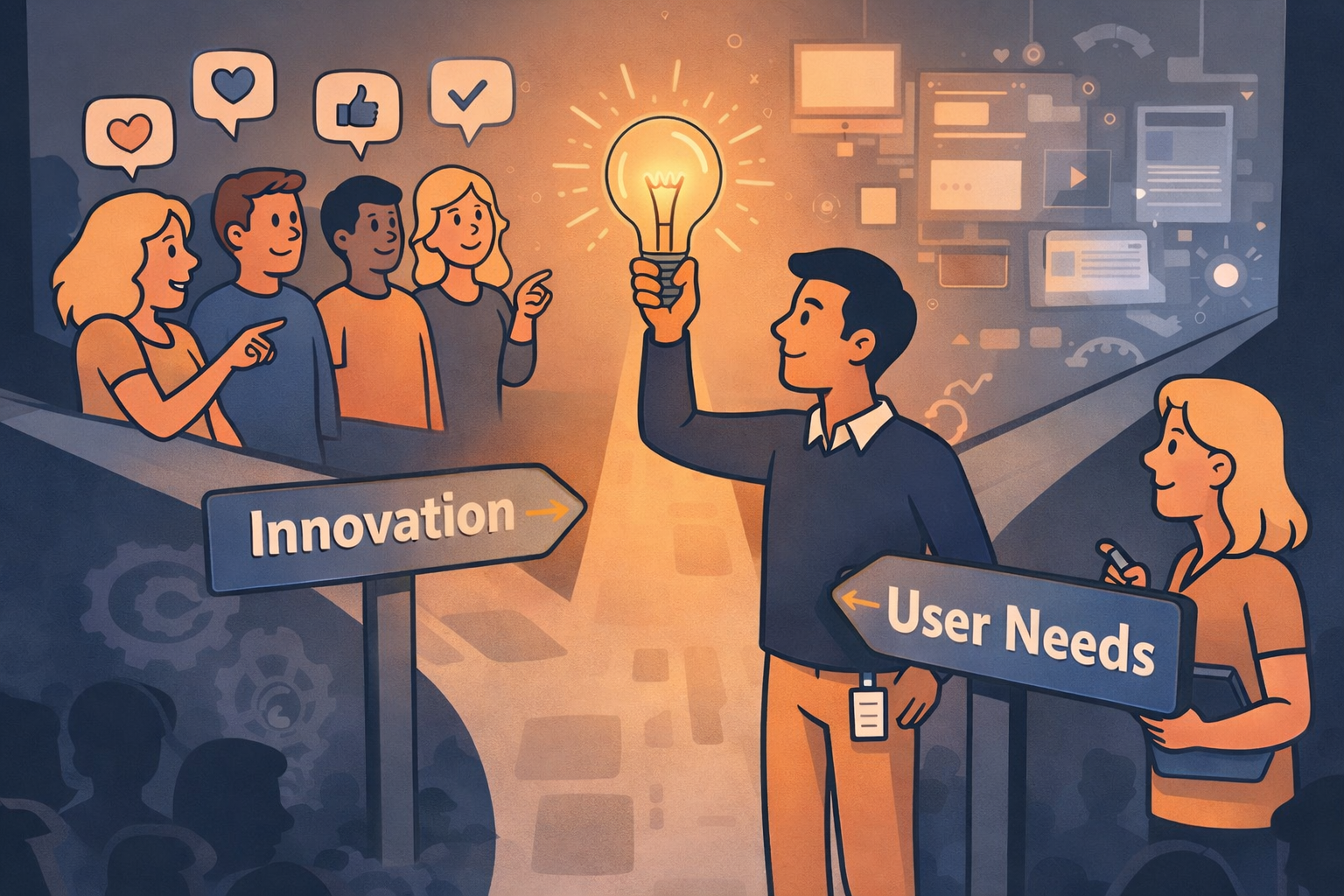
So, how do you strike the right balance between listening and leading? Here are a few strategies to consider:
- Validate Innovations with Customers: Before rolling out a major innovation, test it with a small group of customers. Gather feedback, iterate, and refine the concept based on their responses. This helps ensure that your innovation will be well-received when it’s launched to a broader audience.
- Prioritize User-Centered Innovation: Focus on innovations that solve real customers problems or enhance their experience. Innovations that are disconnected from customer needs are less likely to succeed.
- Communicate the Value of Change: When introducing new features or redesigns, clearly communicate the benefits to your customers. Show them how these changes will improve their experience, making the transition easier and more acceptable.
- Balance Short-Term and Long-Term Goals: While it’s important to address immediate customer needs, don’t lose sight of your long-term vision. Strive for innovations that align with both current customer demands and future product goals.
- Stay Agile and Adaptable: The digital landscape is constantly changing, and so are customer expectations. Be prepared to adapt your strategy based on new insights, emerging trends, and evolving user needs.
Conclusion: Leading with Empathy
Balancing innovation with customer demands is a dynamic process that requires empathy, foresight, and a willingness to take calculated risks. By listening to your customers, you gain the insights needed to keep your product relevant and user-friendly. By leading them, you push the boundaries of what’s possible, driving your product—and the industry—forward.
Ultimately, the key is to approach innovation with a user-centered mindset. Innovate not for the sake of being different, but for the sake of creating better, more meaningful experiences for your customers. When you lead with empathy and listen with intent, you’ll find that the path to innovation is not just about forging ahead but also about bringing your customers along with you.