Think about the last time you had a genuinely great online shopping experience. Chances are, you barely noticed the checkout process — what stayed with you was how the brand made you feel. That gap between “functional” and “memorable” is what separates the brands people return to from the ones they forget.
Today’s consumers are seeking more than just a transactional experience — they want a journey that is personalised, engaging, and seamless from start to finish. Brands that understand this and invest in creating an exceptional customer experience will not only capture new customers but also build long-term loyalty.
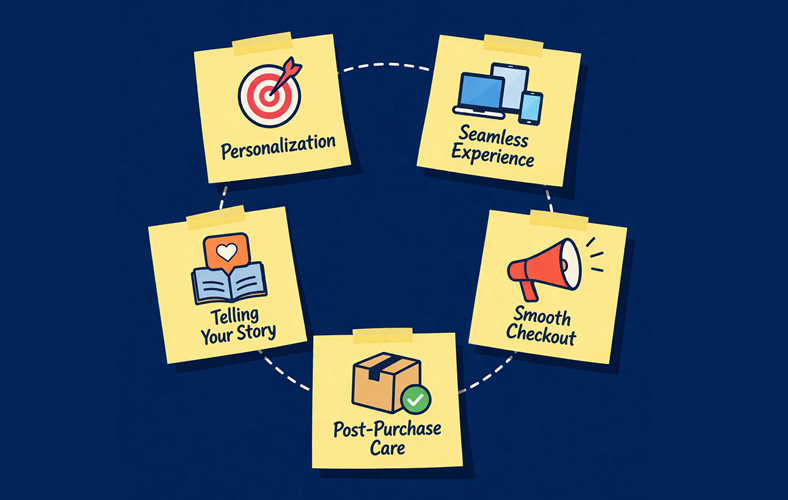
So, how can e-commerce businesses go beyond the basics and truly elevate the customer experience? Here are 5 areas worth focusing on.
1. Personalisation: The Cornerstone of Modern E-Commerce
One of the most significant shifts in e-commerce is the demand for personalisation. Consumers expect product recommendations tailored to their preferences, search histories, and behaviours — a generic product page no longer cuts it.
Amazon and Netflix have mastered this. Their recommendation engines analyse user data to surface relevant products or content, keeping customers engaged and encouraging repeat purchases. For e-commerce, this translates into higher conversion rates and stronger customer satisfaction.
Consider implementing personalised product recommendations, dynamic content based on user behaviour, and targeted marketing campaigns that speak directly to individual needs. Done well, personalisation transforms the shopping experience from one-size-fits-all into something that feels genuinely curated.
2. Seamless User Experience Across Devices
Customers today move between devices constantly — starting a browsing session on their phone, switching to a tablet, finishing on a desktop. Your e-commerce experience needs to work consistently across all of them.
Beyond simply being mobile-friendly, the shopping journey should feel cohesive at every touchpoint. Features like cross-device cart syncing and streamlined account management remove friction and keep customers moving forward, regardless of where they started.
3. The Power of Storytelling
In a crowded digital marketplace, products alone rarely win loyalty — stories do. Brands that connect with customers on an emotional level, whether through the origins of the business, the craft behind their products, or the values they stand for, build something that transactional competitors can’t easily replicate: trust.
Weave storytelling into your strategy across social media, blog content, and even product descriptions. Share behind-the-scenes insights, highlight real customer experiences, and let the human side of your brand come through. It’s often what turns a first-time buyer into a long-term advocate.
4. Frictionless Checkout
A complicated checkout process is still one of the leading causes of cart abandonment — and it’s largely avoidable. The goal is simple: get out of the customer’s way.
Minimise the steps required to complete a purchase, offer multiple payment options, and make the checkout page clean and easy to navigate. Features like guest checkout, one-click payments, and digital wallets such as Apple Pay or Google Pay make a meaningful difference. The easier the path to purchase, the fewer reasons customers have to leave.
5. Post-Purchase Experience: Turning Buyers into Repeat Customers
The relationship with a customer doesn’t end at the transaction — that’s actually where it begins. Yet this is the stage many e-commerce businesses underinvest in.
A thoughtful post-purchase experience can be the difference between a one-time sale and a loyal customer. Personalised order confirmations, shipping updates, and follow-up messages with useful tips or complementary product suggestions all signal that you’re still thinking about the customer after they’ve paid.
Making returns and exchanges easy matters too — it builds the kind of confidence that brings people back. And a well-designed loyalty or rewards program, offering points for purchases, referrals, or reviews, gives customers an ongoing reason to keep engaging with your brand.
The businesses that win in e-commerce aren't just the ones with the best products or the lowest prices — they're the ones that make customers feel something at every stage of the journey.